Outage repairs triaged first
Generator Repair in Portland, Maine
A standby generator that won't start during an outage is worse than no generator: you planned around it. No-starts, failed transfers, error codes, and units that died mid-storm, diagnosed and repaired, with outage calls at the front of the line.
Outage-season priority · Generac, Kohler & most major brands · Clear pricing before work starts
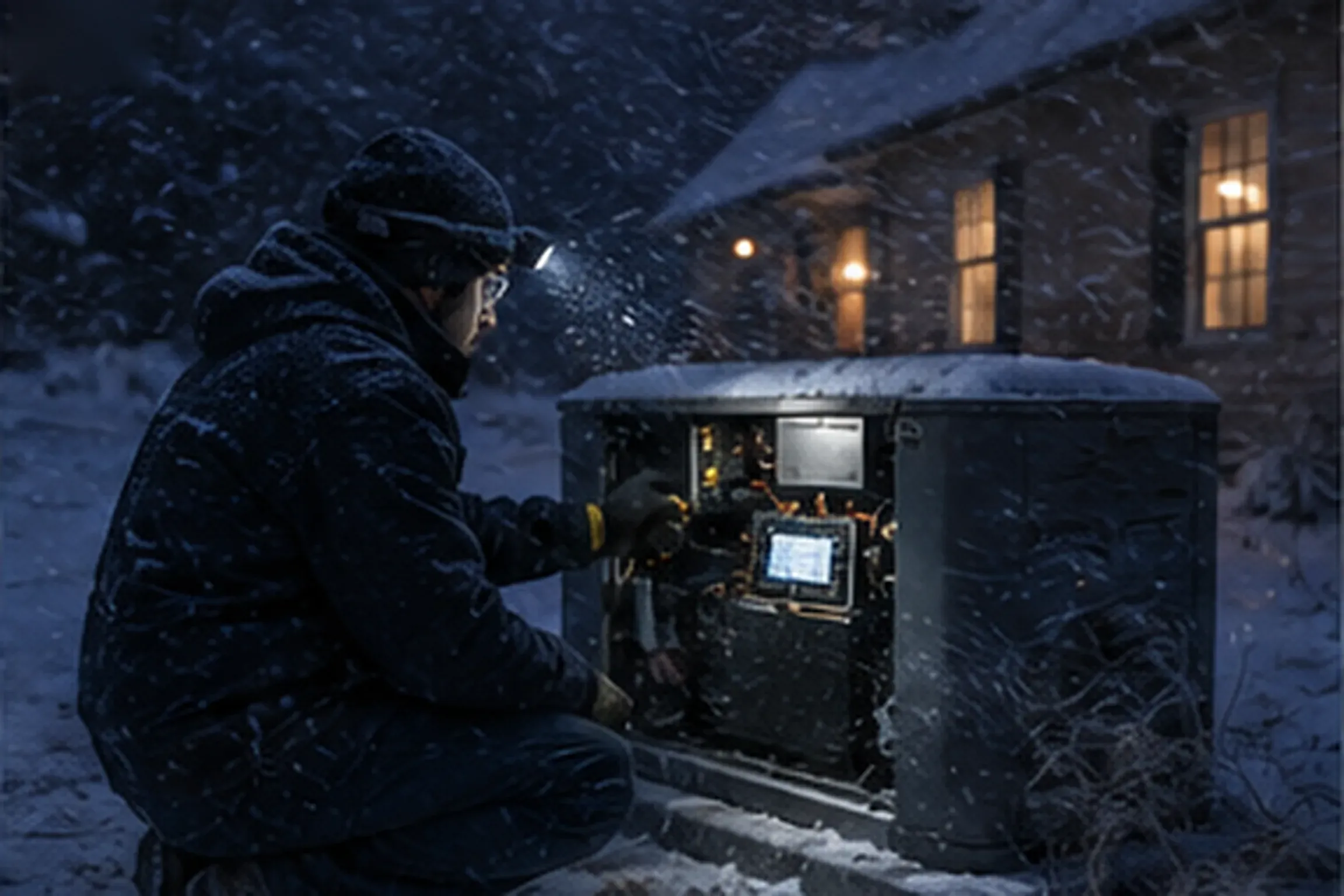
The Failures We See Every Storm Season
- Dead battery, dead generator. The number one no-start cause in cold climates. Generator batteries live outside in Maine weather and die faster than car batteries; they need load-testing every year, not a glance.
- Left in OFF after service or a move. Painfully common in newly purchased homes: the unit is fine, the switch just isn't in AUTO. It's the first thing to check and the cheapest repair in the trade.
- Fuel problems. Empty or mis-valved propane tanks, regulators failing in extreme cold, and gas-pressure issues on long pipe runs. The engine's fine; it's starving.
- Transfer switch faults. The generator runs happily while the house stays dark. Control wiring, contactor, or switch failures, all licensed-electrician work.
- Neglect, compounding quietly. Stale oil, mouse nests in the cabinet (a genuine Maine classic), corroded connections near the coast, five years of skipped service arriving all at once, mid-outage.
How Repair Works Here
Call with the symptom and the error code if the controller shows one. Units that are down hard during an outage get triaged first; everything else is scheduled promptly. Diagnosis comes with a clear price before repair work starts, urgency is never an excuse for a mystery bill, and if the honest answer is that the machine is past saving, you'll get that straight with replacement options priced in writing. And once it's healthy again, a maintenance plan is how it stays off this page: nearly every failure above is exactly what annual service exists to catch in October instead of January.
Common questions
Generator Repair FAQs
My generator won't start during an outage. What should I check before calling?
Three safe checks: make sure the unit's main switch is set to AUTO (not OFF, the most common culprit after service or a curious visitor), check for an error code or light on the controller and note it, and confirm the propane tank isn't empty or its valve closed. Don't open the cabinet or touch wiring. If it's still down after those checks, call and read us the error code; outage repairs are triaged first.
The generator runs but the house never switches over. What's wrong?
That's a transfer problem rather than an engine problem: the automatic transfer switch senses the outage, starts the unit, and moves the house onto it. When the last step fails, the causes range from a control-wiring fault to a failed switch mechanism. It's squarely licensed-electrician territory and one of the most common repair calls after DIY installs.
Do you repair generators during storms and outages?
Outage repairs are the priority during storm events, triaged in call order with down-hard units first. Honest expectation-setting: during a major regional storm every generator tech in Maine is underwater, so calling as soon as the unit misbehaves (rather than waiting a day) genuinely matters. The better play is the annual service that catches failures beforehand.
Is it worth repairing an older generator, or should I replace it?
Depends on age, hours, and what failed. Batteries, plugs, controllers, and fuel components are routine repairs at any age. A major engine or alternator failure in a unit past ten to twelve years usually points at replacement, since you'd be putting half a new unit's cost into an old machine. You'll get that math straight, in writing, before any big repair.
Generator down? Make the call.
Outage repairs go first in line. Note the error code, check the switch is in AUTO, and call. Clear pricing before any work starts.