Published by Portland Maine Generators
The Track Record, Not the Brochure
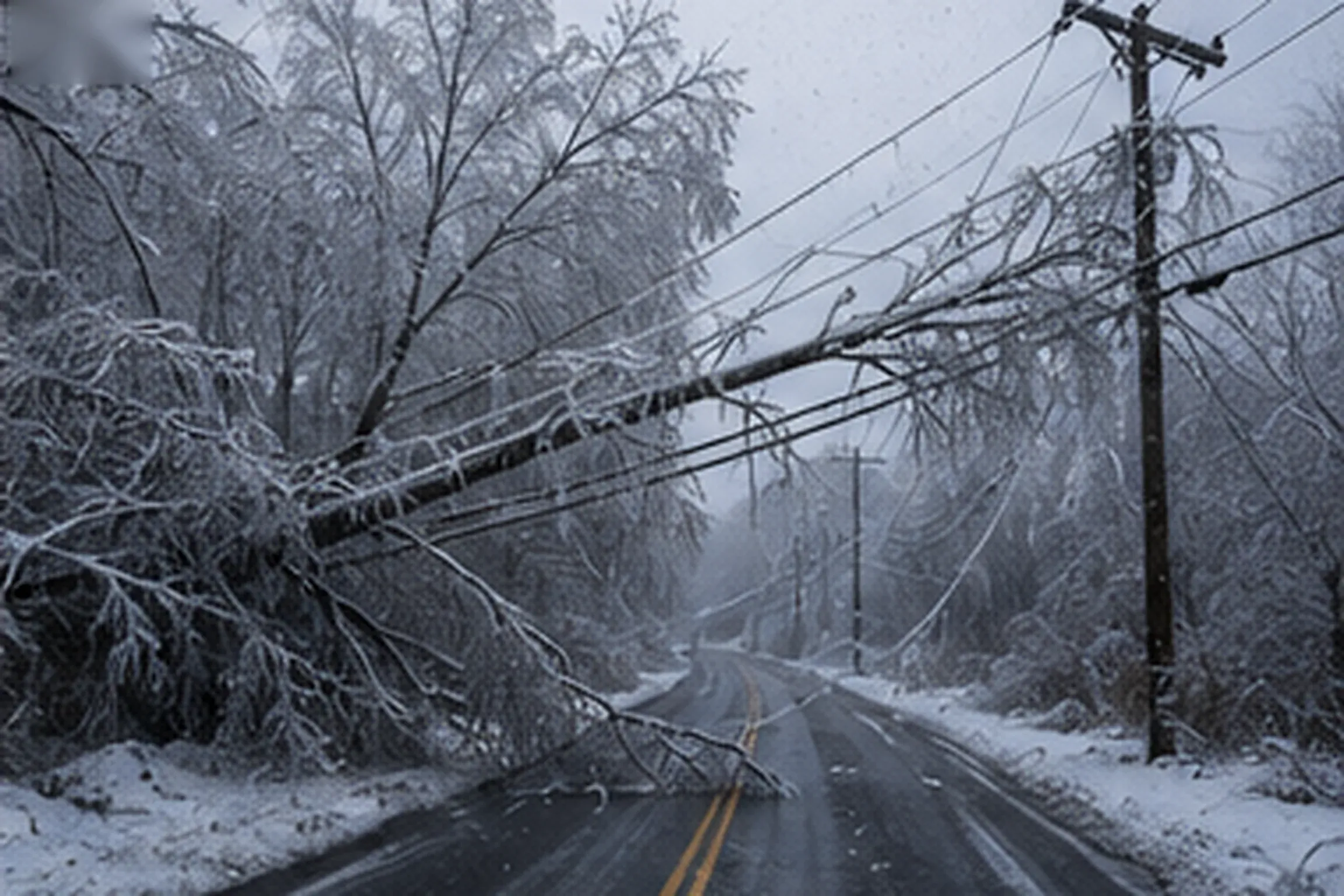
Federal reliability data has put Maine at or near the bottom of all 50 states for outage duration year after year: the average Maine customer loses power for more hours annually than almost anyone else in America, and that's the average year. The storm years are the ones people remember. The October 2017 wind storm knocked out roughly half a million Maine customers, with restorations running most of a week. The December 2023 storm did it again: hundreds of thousands dark, multi-day restorations, right before the holidays. The 1998 ice storm remains the benchmark: parts of Maine spent two weeks or more without power in January. And between the famous ones, ordinary nor'easters and summer thunderstorm lines produce one-to-three-day outages somewhere in southern Maine every single year.
Why the Maine Grid Fails
- Trees, everywhere, over everything. Maine is the most forested state in the nation, and most of its distribution lines run through or beside those trees. Wet snow, ice, and wind turn every overhanging limb into a fuse.
- Long rural lines, few customers per mile. Restoring a line that serves forty houses comes after the line that serves four thousand. If you live off the main corridors, you restore last, every time.
- Coastal wind and wet snow. Greater Portland's storms arrive off the water with the heavy, clinging snow that loads trees and lines. Inland cold snaps follow, which is when an outage stops being an inconvenience and starts freezing pipes.
- A grid built out over a century. Utilities are hardening it, but rebuilding rural distribution takes decades, and the climate isn't waiting.
What "Plan for" Actually Means in Hours
For Greater Portland planning purposes: assume a few outages a year measured in hours, a one-to-three-day outage somewhere in the region most years, and a multi-day regional event every few years, most likely between October and April, in exactly the weather you least want to be hauling gas cans. That planning number is why the standby-vs-portable question tilts the way it does for primary residences here: portables are a fine hours-scale answer and a rough days-scale one. It's also why fuel capacity matters as much as the machine (the fuel guide does that math), and why the outage-week failure mode that actually hurts is a backup system nobody maintained, which is its own solvable problem.
The Costs That Ride Along
The bill for a multi-day winter outage rarely stops at inconvenience: burst pipes when the house drops below freezing, a flooded basement when the sump quits during the storm surge of rain, a freezer of food, hotel nights, lost remote-work days. Southern Maine produces those outages on schedule, and that recurring certainty, more than any single storm, is the actual case for permanent backup power. The grid isn't getting shorter trees.