Published by Portland Maine Generators
What the National Numbers Say
Industry and remodeling-value studies have generally estimated that a whole-house standby generator returns somewhere in the range of half to two-thirds of its installed cost at resale, with consumer-facing estimates sometimes citing home value bumps of 3 to 5 percent for equipped homes. Those are national averages, and national averages include Phoenix and San Diego, places where a buyer has never once thought about their sump pump during an ice storm. Generator value is regional by nature, which is the entire point for Maine.
Why Maine Skews the Math
- Buyers here price outages from memory. Anyone house-hunting in Greater Portland lived through 2017, 2023, or both. A standby generator isn't an abstract amenity; it's the thing their last house didn't have during a very specific bad week.
- It de-risks the scary parts of Maine homeownership. A house on a well with a finished basement is a house one long outage away from no water and a wet rec room. A generator neutralizes that story during a showing.
- Listing agents lead with it. "Whole-house Generac" shows up in the first lines of Maine listings the way "new roof" does, because it moves showings. Faster sales are part of value even when they don't appear in the appraisal.
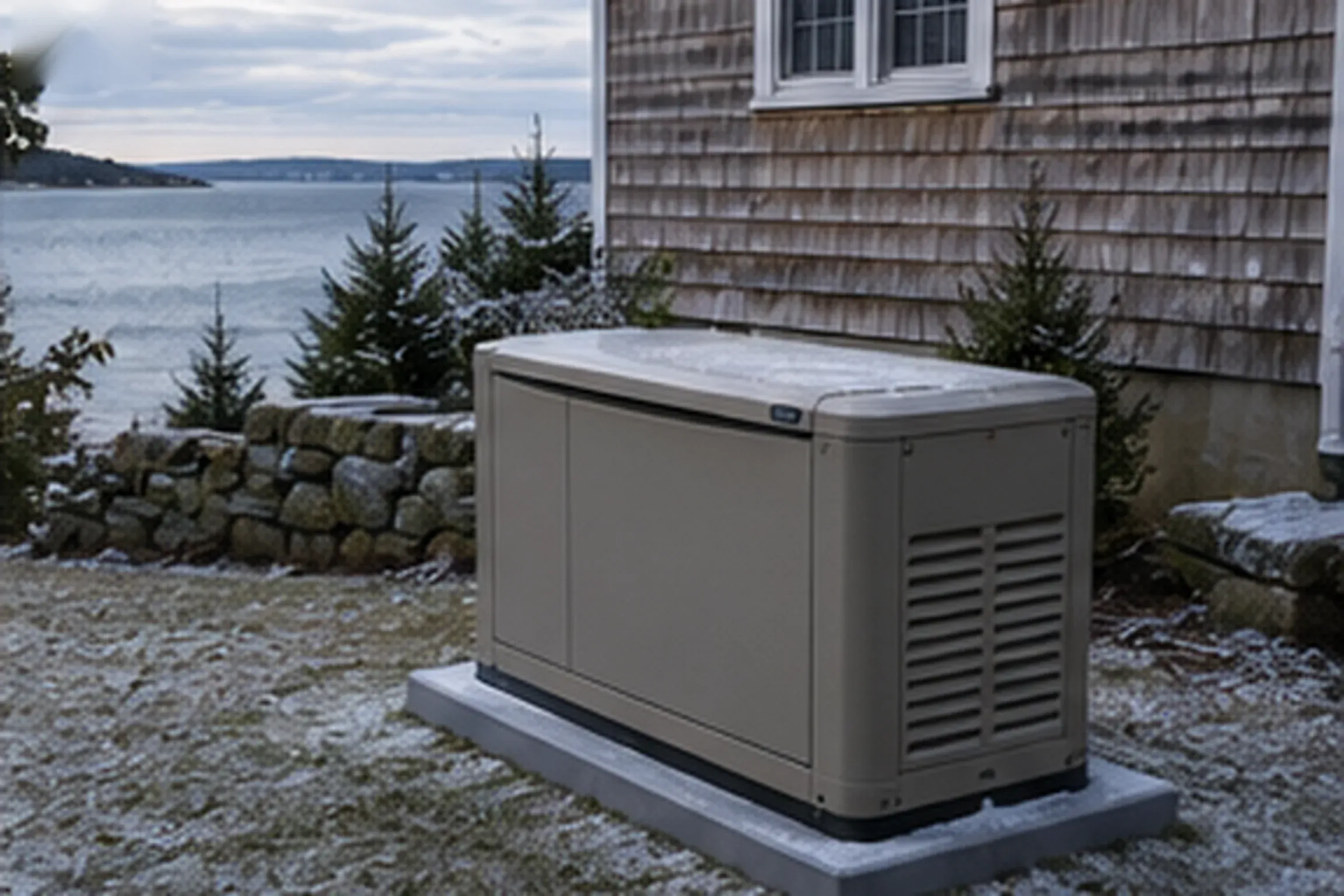
- The install is permanent and transferable. Unlike a portable, the system, pad, fuel line, and transfer switch convey with the house, and so does an active maintenance plan with records, which tells a buyer the machine was cared for.
The Honest Caveats
- You won't recover 100 percent at resale, and anyone who promises that is selling something. You recover a substantial fraction, plus the years of outage protection you personally used.
- Condition matters. A neglected generator that fails the home inspector's test cycle is a negotiating liability, not an asset. Service records fix that cheaply.
- Sizing matters at resale too. A right-sized system (this is the sizing conversation) reads as a well-planned house; a comically oversized one reads as money the buyer can't recover either.
The Real Ledger
Add it up the way an owner actually experiences it: a meaningful slice of the $8,000 to $15,000 installed cost recovered at sale, plus every frozen pipe, flooded basement, spoiled freezer, and lost work-week that never happened while you owned it, plus a listing that stands out in a storm-aware market. The generator is one of the few big-ticket mechanicals that pays some of you back twice: once every outage, and once at closing.