Published by Portland Maine Generators
Natural Gas: Unlimited Runtime, Where You Can Get It
If your home already has natural gas service (much of Portland, South Portland, Westbrook, and pockets of the surrounding towns), the generator ties into it and the fuel conversation is nearly over: no tank, no deliveries, no runtime limit. The generator runs as long as the outage lasts. The caveats are few but real: the meter and line must supply the generator's demand (sometimes the utility upgrades the meter), gas pressure at the end of long runs needs checking, and in a truly catastrophic event gas service itself can be interrupted, though that's rare in Maine's storm outages, which are overwhelmingly a wires-down problem.
Propane: Works on Every Street in Maine
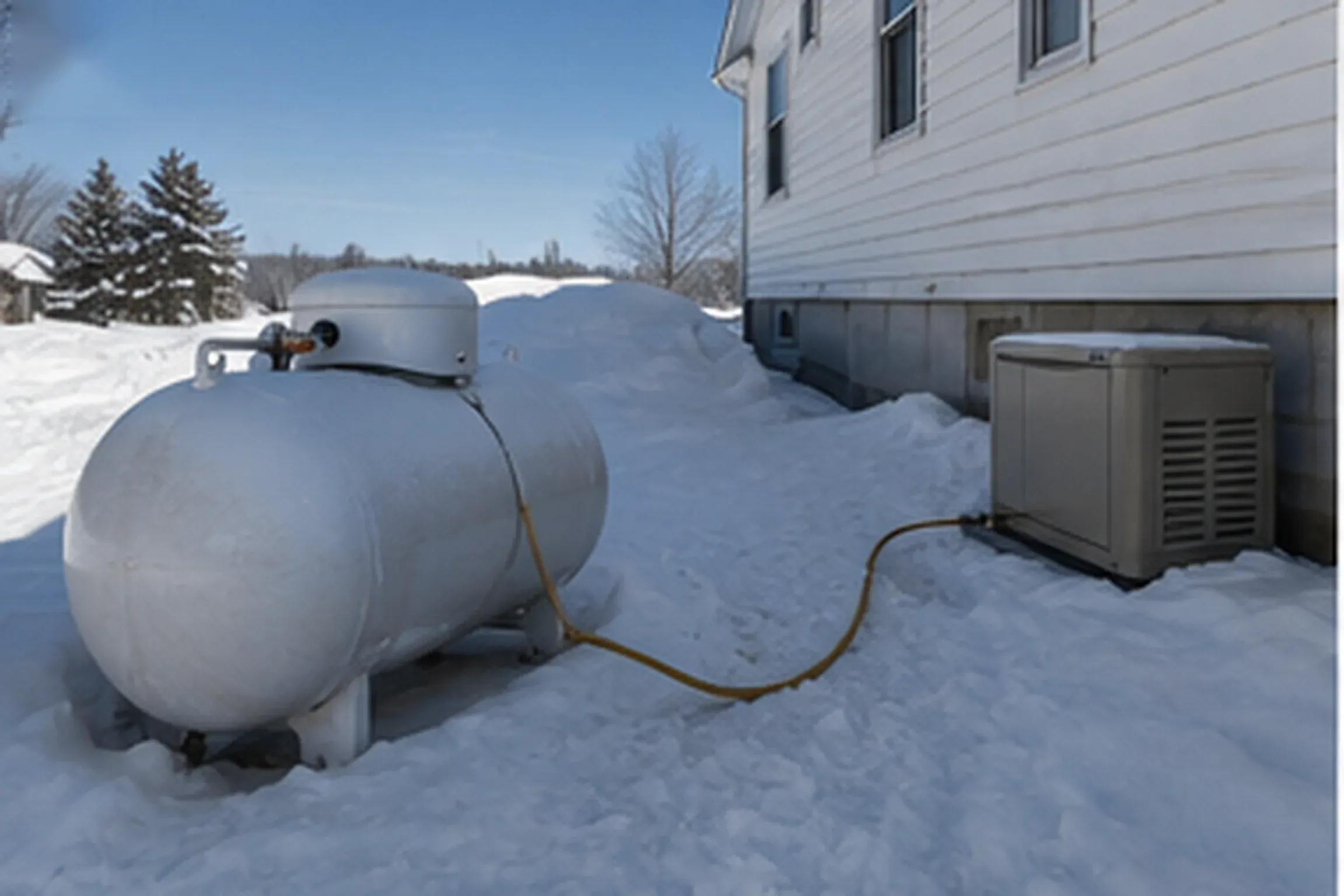
No gas main? Propane is the standard answer, and it's a good one: LP stores indefinitely without going stale (the fatal flaw of gasoline), burns clean, and feeds the same generators at nearly the same output. The design question becomes tank size, because your tank IS your runtime:
- A 120-gallon tank is cutting it close: roughly a day or two of heavy runtime for a whole-house unit. Fine for short outages, thin for the storms Maine actually produces.
- A 250-gallon tank gives most homes several days of realistic (cycling, load-managed) runtime. The common sweet spot.
- A 500-gallon tank covers the week-plus scenario with margin, and often pairs with a home already heating with propane.
Two practical notes: winter deliveries during regional outages get slow, since every propane truck in the county is busy, so the tank should be sized for the outage, not for the refill schedule. And tanks can be owned or leased; leased tanks sometimes restrict who may fill them, which is worth a question before install day.
Cost and Performance, Side by Side
- Install cost: tying into existing natural gas is usually the cheaper path; adding a propane tank and line adds real dollars to the project (itemized in the cost guide).
- Fuel cost per hour: natural gas is typically cheaper per kWh generated; propane costs more per gallon but is only burning during outages, so annual differences are small for most owners.
- Output: most units produce slightly more power on propane; spec sheets list both ratings, and honest sizing uses the fuel you'll actually run.
- Cold weather: both work in Maine winters. Very cold snaps reduce propane tank vaporization rates, which is one more reason undersized tanks bite in January, and one of those details a licensed installer plans around as a matter of course.
The Short Version
Gas main on your street: use it, enjoy unlimited runtime. No gas main: propane with a tank sized for a real Maine outage, 250 gallons as the usual floor. Either way the machine is the same, the install is a day, and the fuel decision is one walk-around with a licensed electrician away from being settled.