Published by Portland Maine Generators
What a Portable Genuinely Does Well
Credit where due: a good portable generator with a properly installed manual transfer switch (never a dryer-cord backfeed, which can kill a line worker) keeps the essentials of a small, fossil-fuel-heated house alive for a fraction of standby money. For camps, short outages, and tight budgets, that's a legitimate solution, and any honest generator company will tell you so. The problems start when the outage stops being short.
Where Portables Fail in a Real Maine Outage
- Someone has to be home, awake, and able. A portable starts when you start it, in the storm, in the dark. If the outage hits while you're at work or away for the weekend, the freezer, the sump pump, and the pipes are on their own.
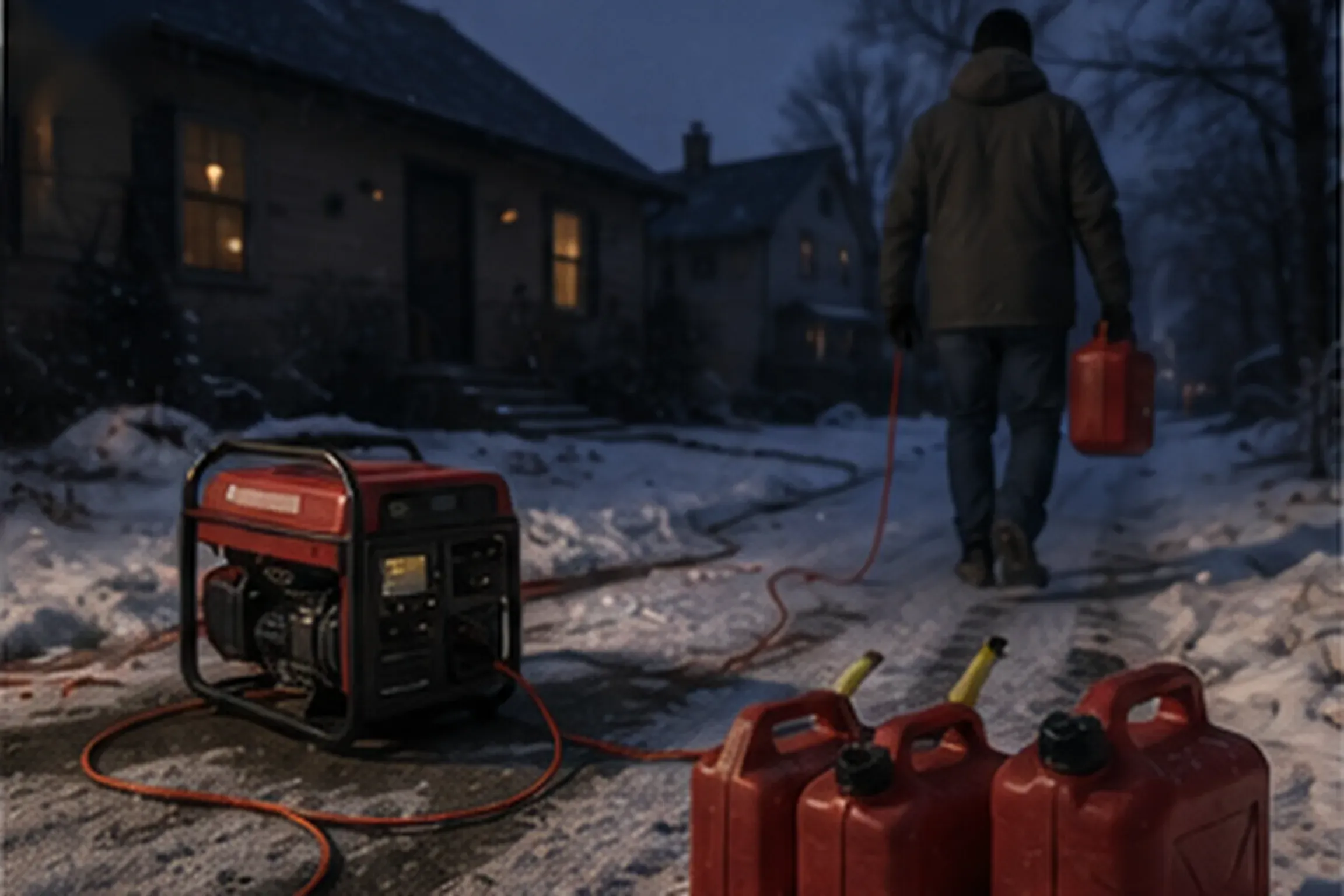
- The gas-can treadmill. A loaded portable drinks 12 to 20 gallons of gasoline a day. Day three of a regional outage means hunting for a gas station that has both power and fuel, with everyone else in the county.
- Winter starting. Small engines, cold-soaked at zero degrees, pull-started in a snowbank. Enough said.
- Carbon monoxide kills Mainers every storm season. Portables must run far from the house, never in a garage or breezeway, even in a blizzard. This is the deadliest mistake in backup power, and it happens here every major outage.
- The big loads don't fit. Well pump plus furnace plus sump pump plus refrigeration exceeds what most portables deliver, which means choosing what stays off, manually, all day.
What Standby Buys You
Everything above, inverted: it starts itself in seconds whether you're home or in Florida, runs on fuel that's already piped or tanked at the house for days or weeks, carries the whole load (sized properly), exhausts safely outside by design and code, and self-tests weekly. The price of all that is real: $8,000 to $15,000 installed for most homes, versus four figures for a good portable setup. What you're buying is the difference between managing an outage and not noticing one.
The Decision, Plainly
- Portable makes sense when: it's a camp or secondary property, outages in your neighborhood are rare and short, the house heats without electricity-hungry systems, someone able-bodied is reliably home, and the budget is the budget.
- Standby makes sense when: you're on a well or have a wet basement, you heat with heat pumps, you work from home, you travel, someone in the house is elderly or medically dependent, or you've lived through one multi-day outage and have no interest in another. (The outage history guide covers just how regularly southern Maine produces those.)
And if you're standby-curious but unsure it pencils out, the resale math in the home value guide is the tiebreaker most people haven't priced in.